September 17, 2026
|
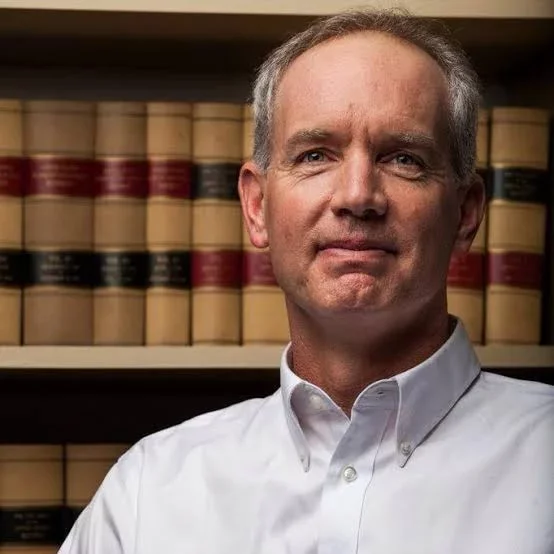
By Delegate Rob Bloxom
Hi, this is Rob Bloxom with another Capitol report.
This week I will attempt to tackle the second of three proposed amendments to Virginia’s Constitution that will be on this year’s ballot. As I mentioned in my last report, my goal is to educate readers in a non-partisan way on what they will be voting on November 3rd.
Current Law
Under Virginia’s Constitution, marriages, civil unions, and other legal relationships with the same rights, benefits, and effects of marriage between persons of the same sex or gender are prohibited. This prohibition is no longer enforceable as a result of a 2014 Fourth Circuit Court of Appeals decision and then the far better known 2015 Supreme Court decision in Obergefell v. Hodges. However, the prohibition on same-sex marriage remains in the state’s Constitution. If the Supreme Court were to overturn its Obergefell decision, that prohibition would be enforceable again.

Proposed Law
The proposed amendment removes the prohibition on marriages between persons of the same sex or gender from the Virginia Constitution’s Bill of Rights. It is replaced with the fundamental right to marry, requiring the state to recognize and treat equally under the law any lawful marriage between two adult persons, regardless of the sex, gender, or race of either person. The proposed amendment prohibits the state from denying a marriage license to two adult persons because of their sex, gender, or race. The ballot question and the text of the proposed amendment may be found below.
Proposed Constitutional Amendment, November 3, 2026 General and Special Elections, Question 2
BALLOT QUESTION 2
Question: Should the Constitution of Virginia be amended to (i) remove the ban on same-sex marriage; (ii) affirm that two adults may marry regardless of sex, gender, or race; and (iii) require all legally valid marriages to be treated equally under the law?
FULL TEXT OF AMENDMENT
[Proposed new language is underlined. Deleted old language is stricken.]
ARTICLE I

BILL OF RIGHTS
Section 15-A. Marriage.
That only a union between one man and one woman may be a marriage valid in or recognized by this Commonwealth and its political subdivisions marriage is one of the vital personal rights essential to the orderly pursuit of happiness.
This Commonwealth and its political subdivisions shall not create or recognize a legal status for relationships of unmarried individuals that intends to approximate the design, qualities, significance, or effects of marriage deny the issuance of a marriage license to two adult persons seeking a lawful marriage on the basis of the sex, gender, or race of such persons. Nor shall this Commonwealth or its political subdivisions create or recognize another union, partnership, or other legal status to which is assigned the rights, benefits, obligations, qualities, or effects of marriage This Commonwealth and its political subdivisions shall recognize any lawful marriage between two adult persons and treat such marriages equally under the law, regardless of the sex, gender, or race of such persons.

Analysis
In my view, the issue before voters with this second question is much more straightforward than the first. Virginia’s current constitutional ban has been unenforceable for more than a decade due to federal constitutional rulings. The Supremacy Clause means our state constitutional language cannot be enforced against couples today. This amendment would remove stale language and go somewhat further.
Interestingly, it also adds race to the constitutional text. Those of us old enough to remember, or those among us who are students of history or law, will remember that this was already protected by the famous 1967 Supreme Court decision Loving v. Virginia. In that case, the Court struck down bans on interracial marriage, resting primarily on the Equal Protection Clause of the 14th Amendment and, in part, on the Due Process Clause, and describing marriage as a fundamental right.
The authors of this amendment likely added race to the question and text out of concern that Loving’s due-process reasoning is potentially weakened by the Dobbs case we discussed last week (which overturned Roe v. Wade). In Dobbs, the majority wrote that courts should be cautious about recognizing rights that are not specifically listed in the Constitution and emphasized whether a claimed right was deeply rooted in history and tradition. In his concurrence, Justice Thomas urged the Court to reconsider three other cases involving rights currently protected by the Due Process Clause (Griswold, Lawrence and Obergefell). He did not call for revisiting Loving, but his comments heightened anxiety that other similar rights could be challenged.
It is also worth noting that this amendment is not purely a housekeeping update to match federal law. Beyond deleting the ban, it affirmatively bars the Commonwealth from denying a marriage license to two adult persons on the basis of sex, gender, or race, and requires that any lawful marriage between two adults be recognized and treated equally under the law. That is broader than what Obergefell itself requires.

There is less ambiguity in this amendment than the one we discussed last week. I find the verbiage describing an “orderly” pursuit of happiness interesting, but not necessarily problematic. The one word that may be litigated in future years may be “gender.” If that happens, the meaning of this state constitutional language would be decided by the Supreme Court of Virginia. Washington would only become involved if a federal constitutional question were raised.
Finally, a point of clarification on what a future Supreme Court might do. If the Court were to reverse Obergefell, the question would return to the states. Under current law, that would revive the ban still sitting in our Constitution. If this amendment passes, the opposite would be true, and Virginia’s own Constitution would protect the right to marry as a matter of state law. Separately, the federal Respect for Marriage Act of 2022 would continue to require recognition of lawful marriages. So, this vote is less about recognizing Obergefell than about deciding which rule Virginia would fall back on if federal protection ever changed. Predicting future Supreme Court cases is above my pay grade, but that is the practical stake.
I hope this description was helpful, and as always, please do not hesitate to reach out with any questions. Also, please remember to vote on November 3rd. Thank you.
Listen Live!


Local Weather
October 5, 2026, 12:02 pm


Light rain
64°F
64°F
9 mph
Apparent: 64°F
Pressure: 1018 mb
Humidity: 82%
Winds: 9 mph NW
Windgusts: 22 mph
UV-Index: 4.11
Sunrise: 7:01 am
Sunset: 6:40 pm
Visit our sponsors

FOLLOW US
OUR ADVERTISERS





Member of the